Understanding buildings through physics and data, and improving how they operate
We combine the physical characteristics of buildings and their systems with operational data to predict energy performance and interpret operating behavior. In a digital twin, we train and validate operating strategies, and study autonomous operation that responds to the building's state and demand.
Building Physics
Physics-based models are calibrated with operational data and their parameters optimized to predict building loads and equipment performance.
Integrated Multiphysics Modeling
Physics-based models of the building and its systems are integrated and linked with operational data to build a digital twin that reproduces their interactions and operating behavior.
Digital Twin-Based Autonomous Control
Control agents are trained in the digital twin, and operating strategies and control performance are evaluated.
Research problem
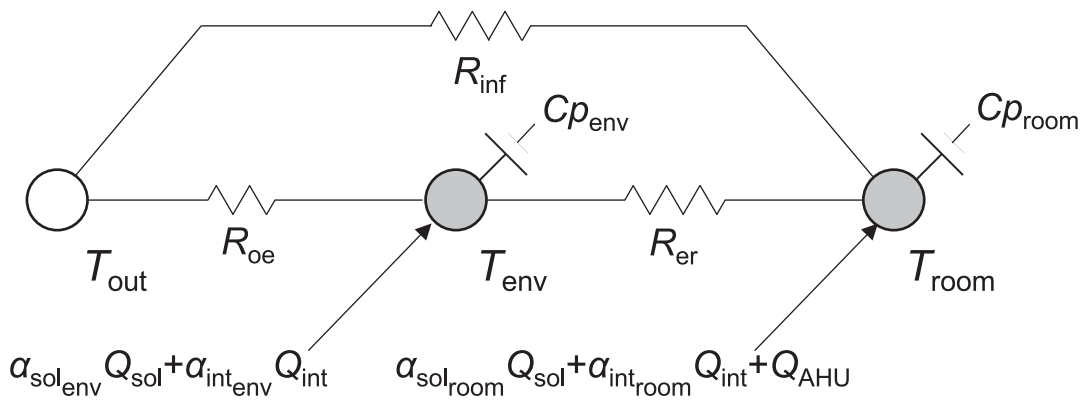
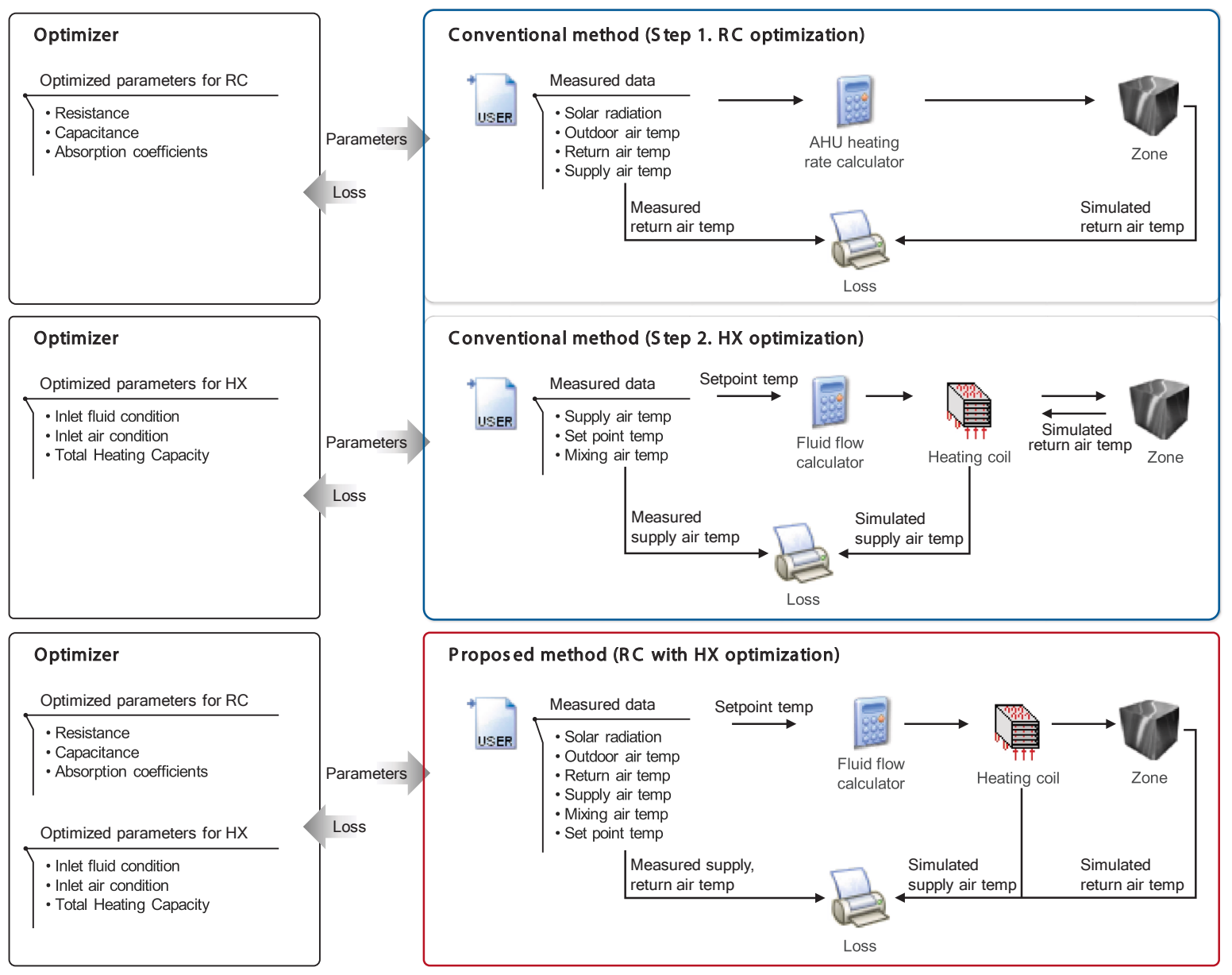
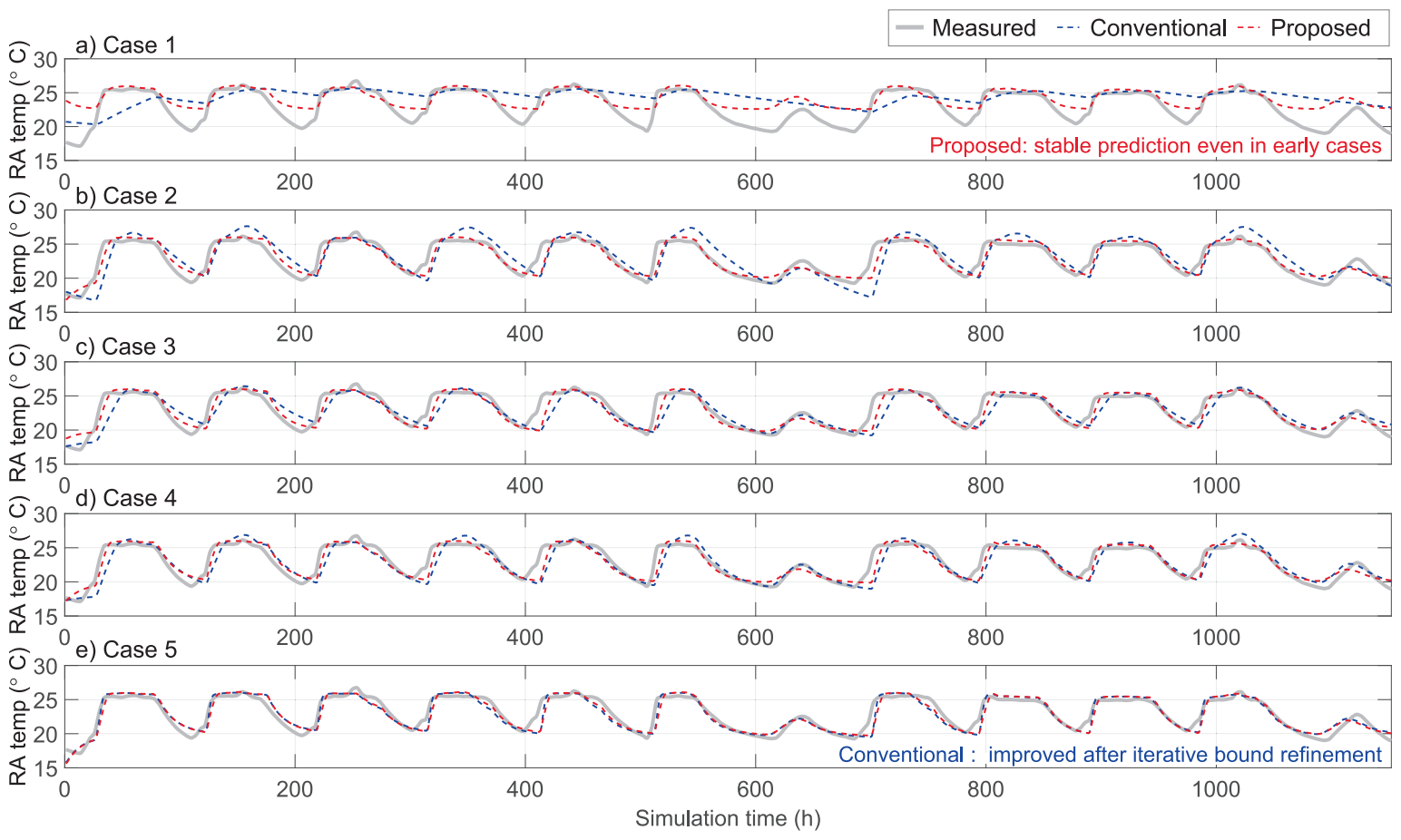
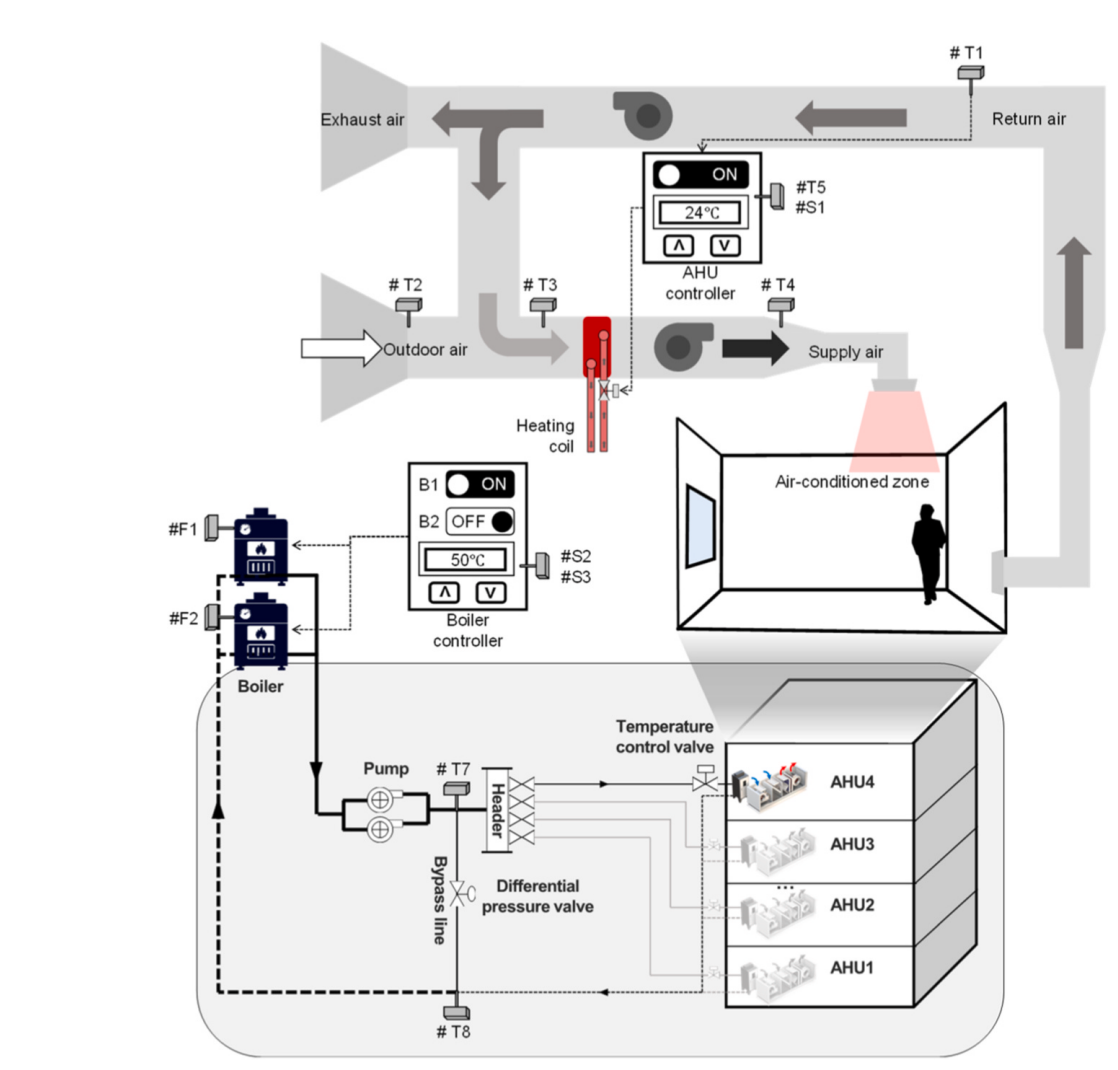
In existing buildings, the measured variables and the range of operating conditions are limited, so equipment performance is difficult to characterize from collected data alone. We link operational data from building automation systems (BAS) and building energy management systems (BEMS) to physics-based models to predict indoor temperature, building loads, and heat-source energy consumption.
Fault detection and diagnosis from operational data
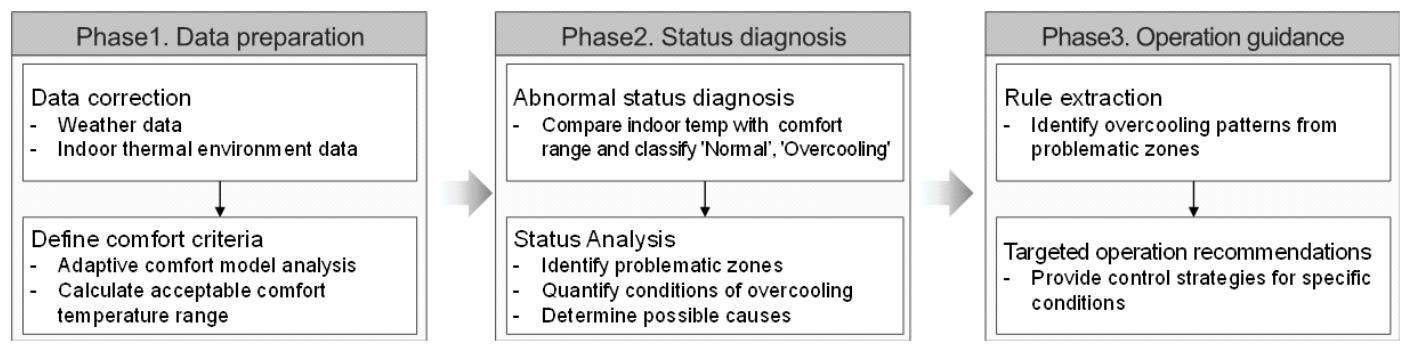
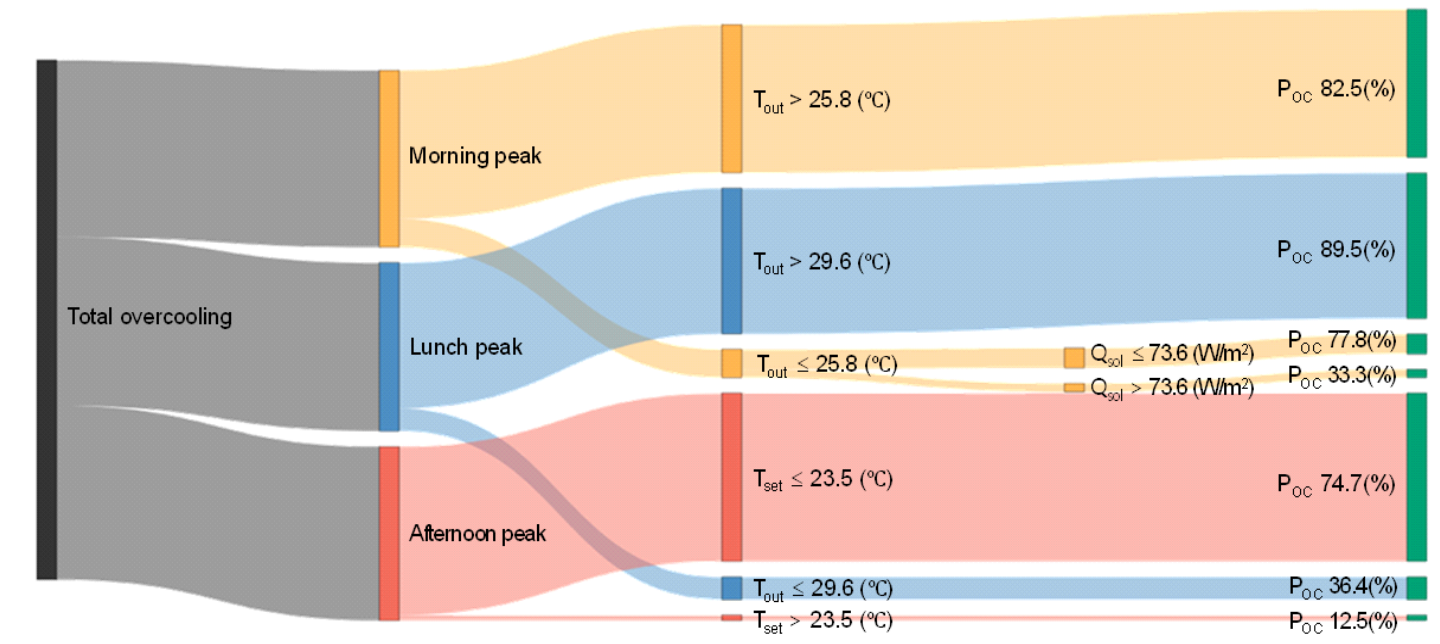
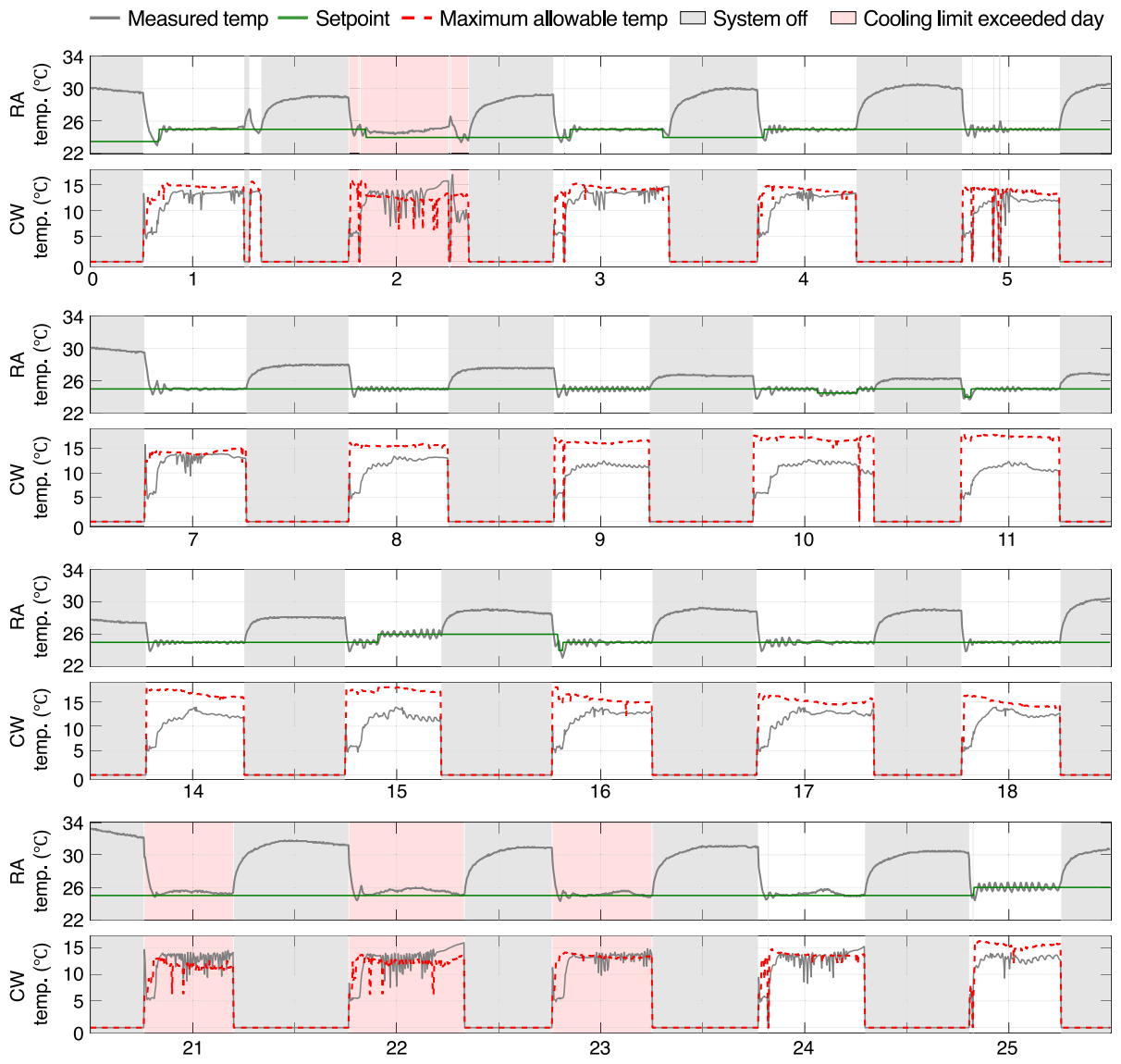
BEMS operational data are used to diagnose overcooling, where indoor temperature falls below the comfort range. A fault detection and diagnosis (FDD) framework that classifies causes by time of occurrence and operating condition, and derives guidelines for improving operation, was applied to an actual office building.
Research problem
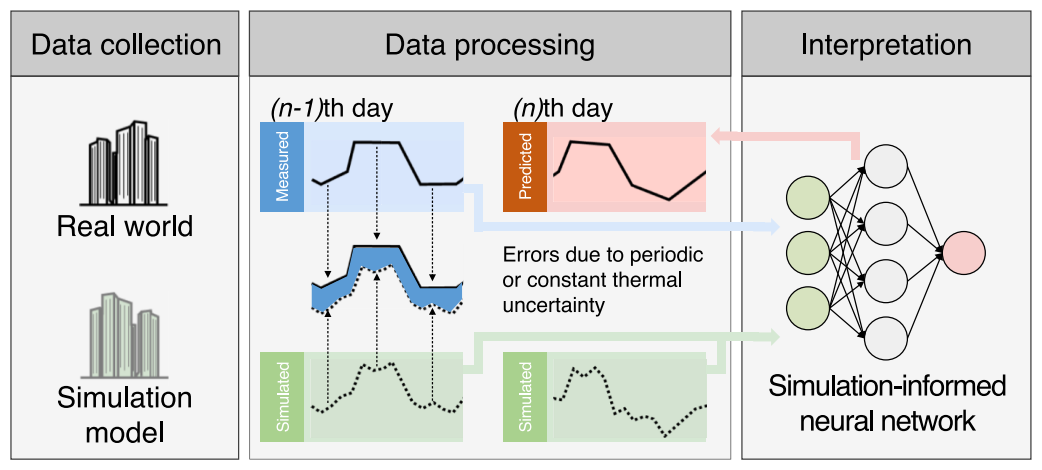
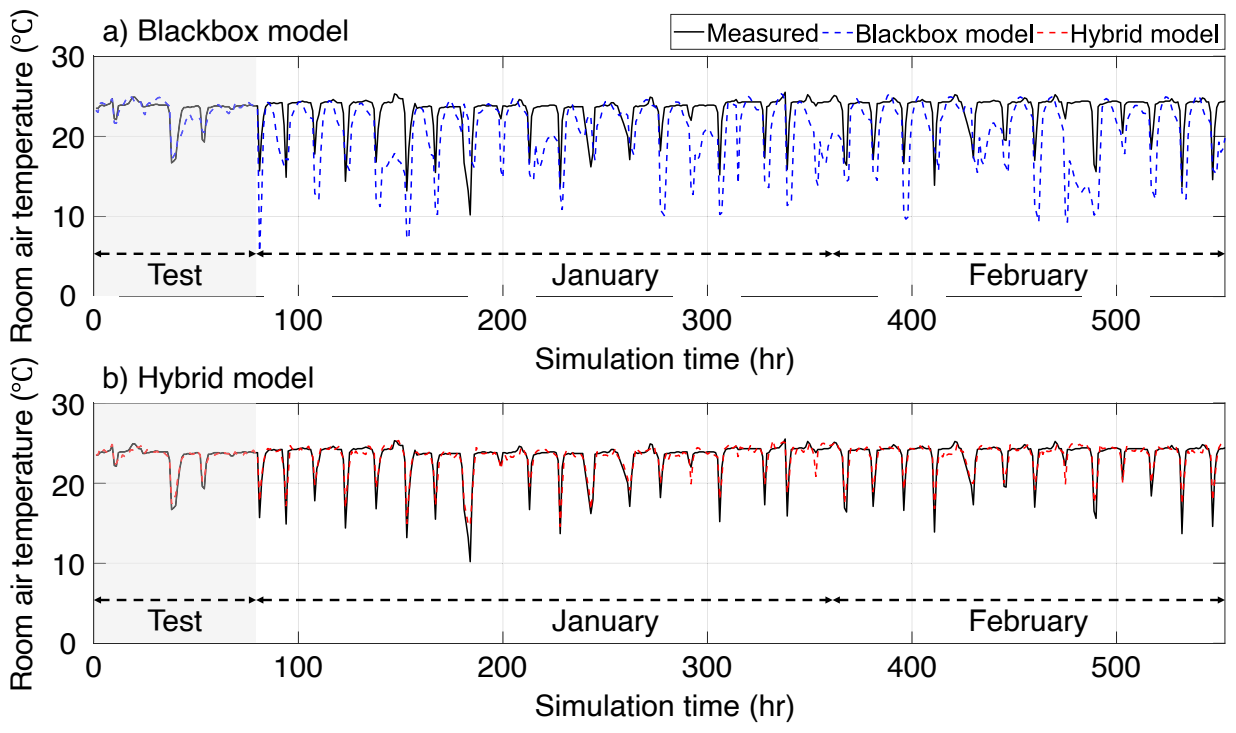
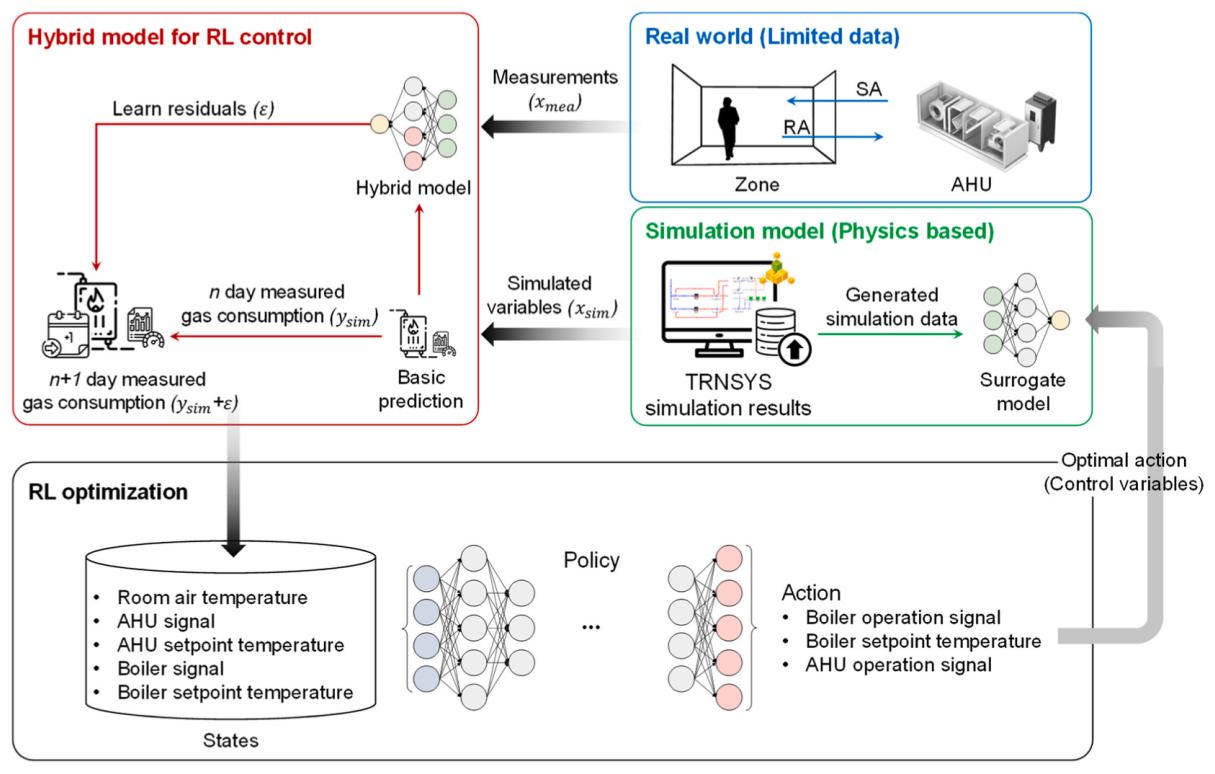
Physics-based models struggle to reproduce the characteristics of actual buildings, while data-driven models can lose accuracy under operating conditions they were not trained on. We study digital twins that combine physics-based models with operational data to extend the prediction range even in data-limited settings.
Application: thermal energy storage for cooling
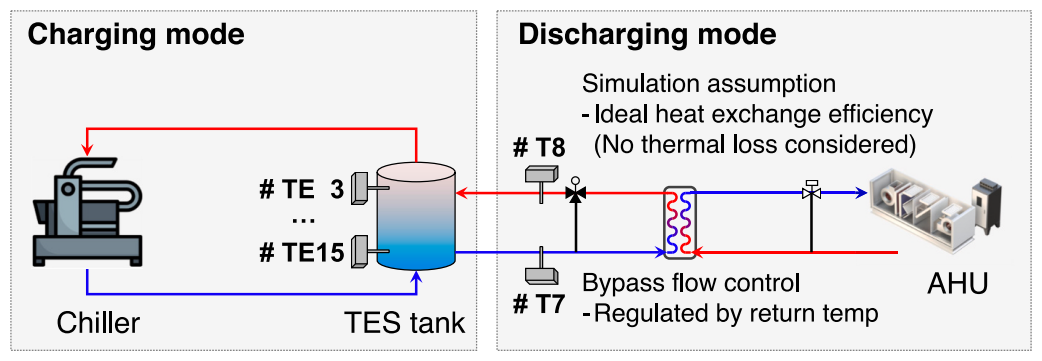
In a heat pump-coupled thermal energy storage (TES) system, keeping the chilled water colder than necessary lowers operating efficiency. By linking models of relative humidity, cooling load, the cooling coil, and TES discharge, we determine the maximum chilled-water supply temperature that still meets cooling demand. Operational data and physics-based models identify the supply-temperature limit and set a daily TES charging temperature matched to operating conditions.
Research problem
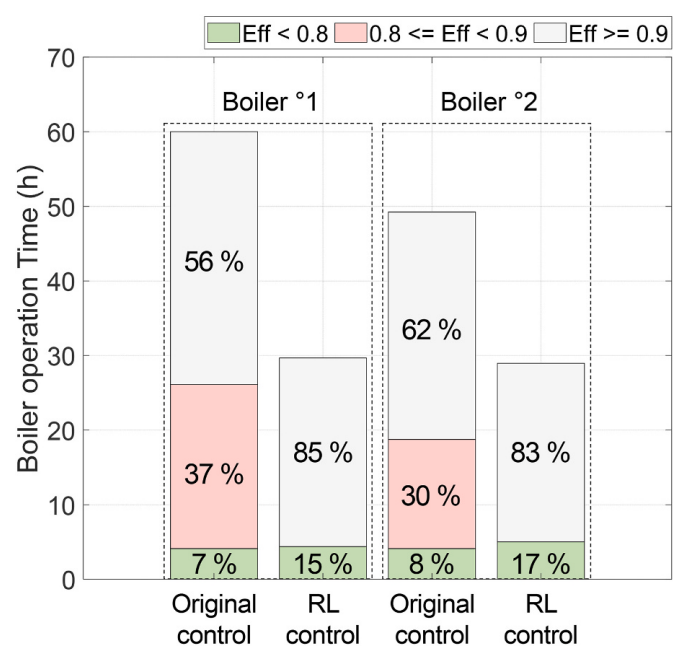
Reinforcement learning needs an environment in which many episodes can be run, but in a real building, operating constraints make it difficult to test new strategies repeatedly. We therefore provide the digital twin as a training environment for the agent, making control autonomous.
Connecting prediction and interpretation to control decisions
We extend the range of prediction by integrating physics and data, understand operating behavior through physical laws and causal relationships,
and connect both to autonomous control matched to the building's state.
Extending prediction and physics-based interpretation
- Use physical relationships to improve prediction beyond the training range.
- Interpret equipment operation and energy use through physical laws and causal relationships.
- Detect changes in equipment performance and recalibrate the digital twin automatically.
Autonomous decision-making based on building state
- Study operating strategies that jointly consider energy efficiency, indoor comfort, and equipment constraints, using model predictive control (MPC) and reinforcement learning.
- Build on our hydrothermal energy project to study operating strategies that link heat pumps, thermal storage, and building loads.
- Extend control from individual equipment to the integrated operation of buildings and building clusters, aiming for autonomous control that connects state assessment to strategy selection and execution.